
 6.5/10
 94%
 78%
 89%
 3.6/5
 61%

- 31 Days of Halloween — 2026 Edition
- Hellbound: Hellraiser II
- The Blair Witch Project (1999)
- Elvira: Mistress Of The Dark
- Terror Train
- Candyman (2021)
- Friday the 13th (1980)
- Eyes Without a Face (Les Yeux Sans Visage)
- In The Mouth Of Madness
- The Nun
- Friday The 13th: Part 2
- Salem's Lot (2004 Mini-Series)
- The Haunting (1963)
- The Substance
- A Nightmare On Elm Street (1984)
- Audition
- Evil Dead (2013)
- Suspiria (1977)
- Rosemary's Baby
- Bug (1975)
- Get Out (2017)
- Prince Of Darkness (1987)
- Teenage Sex And Death At Camp Miasma
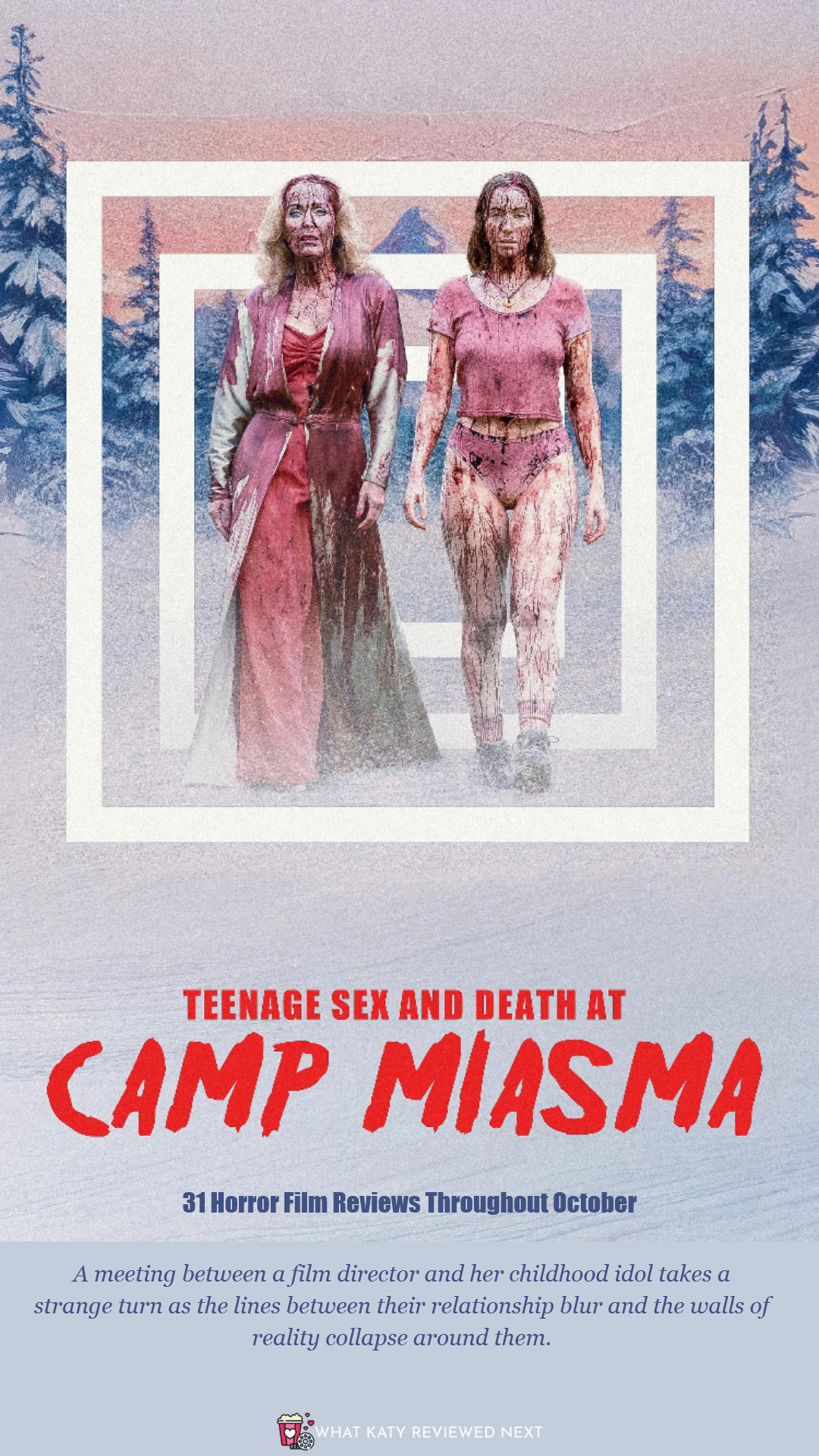
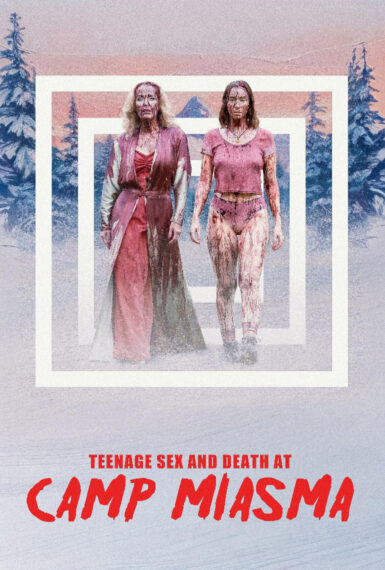
In the world of Teenage Sex And Death At Camp Miasma, “Camp Miasma” was a popular slasher film in the 1980s which featured a transgender character who was mocked and killed by fellow kids at the titular “Camp Miasma”, turning them into a crazed serial killer called Little Death.
Periodically Little Death will return and kill the campers of Miasma, rising from the lake with a spear and (for an unknown reason) an air conditioning unit on their head.
Like most franchises of this type, the initial couple of (fictional) films were well received but studios seeking a cash cow milked them dry with ridiculously more and more far fetched sequels until public interest waned and the franchise was dropped when it stopped making money.
Sound familiar?
Three decades later studios are looking to resurrect “zombie IPs” — properties that were popular in the past and still have a cult following but have no new or original content being created. Producers understand that the transphobic overtones of “Camp Miasma” won’t fit with a modern audience and so they hire queer director Kris Williams — whose claim to fame is “making Psycho from the perspective of the shower curtain” — to reboot the franchise.
The producers hope that Kris will be able to make “Camp Miasma” acceptable to a modern audience and get around the more problematic elements of the storyline and characters so that it works in a modern age. As part of her research Kris has been in communication with the original “Camp Miasma final girl” actress, Billy Presley.
Kris has a special connection to the “Camp Miasma” films, it’s one of the first films she could remember watching and a particular scene featuring Billy has always stuck with her so when Billy asks her to pay her a visit Kris jumps at the chance.
Since filming the first “Camp Miasma” film in 1983 Billy didn’t have many roles and became a recluse, strangely buying the real life location, Camp Tivoli, that was the setting for the film.
As the two women bond over their memories of “Camp Miasma”, good and bad, Kris begins to question not only her place making the film but also her place in the world as well. Being with Billy unleashes something Kris thought long repressed, but is it Billy who is making her feel this way or her connection to the film?
A Struggle
🎃Warning! Spoilers for Teenage Sex And Death At Camp Miasma ahead!⛺
It’s ironic that this film is about struggles: a production company’s struggle with the problematic past of a once hit franchise; Billy’s struggle with the trauma she experienced during the making of “Camp Miasma” which forces her to back away from human connection; Kris’s longing to experience what she feels is a normal loving relationship.
Everyone in this film is broken in some way and struggles on various levels to make a connection, the irony I mentioned before? My struggle to connect with this film.
I really, really wanted to like it. The premise is interesting to me, Gillian Anderson is a wonderful actress and it’s great to see films from smaller studios receiving such acclaim but there was something that just didn’t click with me.
Firstly I do have a slight issue with the portrayal of the age-gap relationship between Kris and Billy. While it is 100% consensual and if anyone holds the power it’s Kris as she can revive Billy’s career, I couldn’t help thinking that if this was a man in his mid-fifties with a not-quite 30-year-old woman or man then we would have found the thought of them together inappropriate. And yet with it being two women it’s somehow okay and that’s a big representative problem for me as a queer woman — do two woman have different standards when compared to men? Because they shouldn’t.
Yes, both characters have their own agency and yes both characters are acting of their own free will (to a point, more on that in a moment) there’s something just “off” about the relationship in a post #MeToo era that doesn’t sit right especially as Billy mentions a film she was being put forward for that was written by convicted predator Harvey Weinstein.
And this made me examine their relationship more than I probably should have and took me out of the rest of the story. Because of my discomfort I feel like I missed a lot of nuance that I probably would find on a second (or third) watch but I unfortunately don’t have the luxury of doing that at the moment due to the review schedule I have set myself.
Reality But Not
Teenage Sex And Death At Camp Miasma (I’m going to call it TSADACM to save typing from now on!) is about movies within movies. We’ve seen this before with the likes of the Scream franchise using movies to highlight the tropes and satirically use them to the movie’s advantage, or implementing the in-universe “Stab” franchise and TSADACM attempts to turn this on it’s head and misses the mark quite a bit.
The idea is that the events the characters are experiencing are the film, and they are acting out stories that Little Death is creating for their own amusement.
The thing is, the lines between “reality” and Little Death’s film universe are so blurred it ruins the whole idea. Again, maybe this would be improved with a second watch but I shouldn’t really have to watch a film multiple times in order to understand its basic premise.
When Kris first arrives at Camp Tivoli it looked a bit weird as it was obviously a set with a matt painting as the backdrop which in the day and age of digital compositing is an oddity. So I thought that maybe it was a stylistic choice and then later when it’s revealed that Little Death is the director of their own films I thought that it was proof that Kris had entered a set and she had become part of the cast.
But then we have the whole transformation scene when Little Death appears and the world changes from snowy winter to spring and that is when Kris enters the movie.
But I couldn’t get the backdrops out of my head – they could have been used to such greater effect by looking realistic at first and then becoming faker as Kris got drawn deeper and deeper in to the Little Death universe to show the transition (pun intended) but they just looked a bit cheap to me as an art decision for the “real world” scenes.
Satire But Not Satirical
Then we have the whole Little Death murder sprees which, I will admit, were a highlight of the film to me and had me in hysterics. The over-the-top kills with absolute geysers of blood were fantastic and if I am honest I could have just watched an hour and forty minutes of that.
It highlights the “gore for gore’s sake” mentality of films of this type of the 1980s (think Johnny Depp’s death in A Nightmare On Elm Street) and the way that people stand around and don’t run away waiting to be the next victim is also a great take on the stupidity of victims in slasher films.
But that’s where the satire ended for me.
There was no commentary on the over-the-top nature of the kills, nothing was said about the “final girl” trope or that people who have sex or do drugs are always the ones to die.
It was a complete missed opportunity to take a look at the genre and say “See! This can’t work any longer. Society has moved on and this can only exist in a twisted fake reality and not even in a fake film any more.”
But it ignored it completely.
Confusion Isn’t Being Clever
This is supposed to be some kind a meta-criticism of all sorts of tropes from mindless (and literally faceless) slasher killers, Trans people as killers (the examples given are Dressed To Kill and Sleepaway Camp), the treatment of actors (specifically young female actors) on set and yet these all feel like they’re dealt with purely on a surface level.
I might have missed something but when Billy is describing the trauma she feels over the first time she had sex, it was within the context of the first “Camp Miasma” film. If this film took part in the “real world” then was the sex scene she took part in real as in her male co-star had actual sex with her? If it’s in the “film world” then should it have as much of an effect on the audience as it’s basically make-believe? Or was Billy abused at some other time which I missed?
While she’s an obviously deeply troubled person, because I failed to understand the root of that trauma it didn’t have as much as an impact on me as it could have.
And the same is true of Kris. We could argue that she’s only now being drawn into Little Death’s movie world but if Little Death is creating the movies and Kris watched the movie where Billy was assaulted (either for real or in the Little Death Universe) what universe does Kris inhabit?
The blurring of lines between what is real and what is a construction of Little Death is so messy I just can’t get my head around it — to the point that I watched a couple of explainers and was still none-the-wiser.
I get that Kris and Billy enter Little Death’s film willingly toward the end of TSADACM, and that this allows Kris to finally open up and experience an orgasm that she’s been yearning for for years, but how were they alive at the end of the film when producers and her partner are seen as still being dead the following morning? Was that an illusion, if so why are the bodies still there when the film has ended? Did the producers and girlfriend really die? Does that mean that Billy and Kris can only orgasm whenever Little Death makes an appearance?
It was so confusing and for a film of this type that really isn’t that deep it shouldn’t be.
And those questions ruined the whole film for me.
I like films that get me to ask questions. That ask me to examine my thoughts and attitudes. But in order to do that I need to understand the basic premise of what I’ve just watched, and I couldn’t do that with this film
I don’t know if it was just a bad script, I don’t know if it was hacked about a bit in the edit, or maybe I just wasn’t in the right frame of mind and so missed all of the points that would explain away my confusion, but whatever it was I am afraid that Teenage Sex And Death At Camp Miasma fell wide of the mark for me.
Will I watch it again? Yes, I will give it another go so I can pick up on things I missed (there’s the whole sweet/candy wrapper thing and the Little Death/French name for Orgasm for starters) but as I said before I shouldn’t be left this confused after an initial watch which is a shame.
Watch Teenage Sex And Death At Camp Miasma if you have smoked loads of weed so will be able to vibe with the stoned characters and their shenanigans, just be aware you’ll get the munchies from the amount of candy on display.
 Apple TV
 Fandango At Home
 Amazon VideoMUBIMUBI Amazon Channel