 6.8/10
 3.4/5
3.4/5
 61%
61%
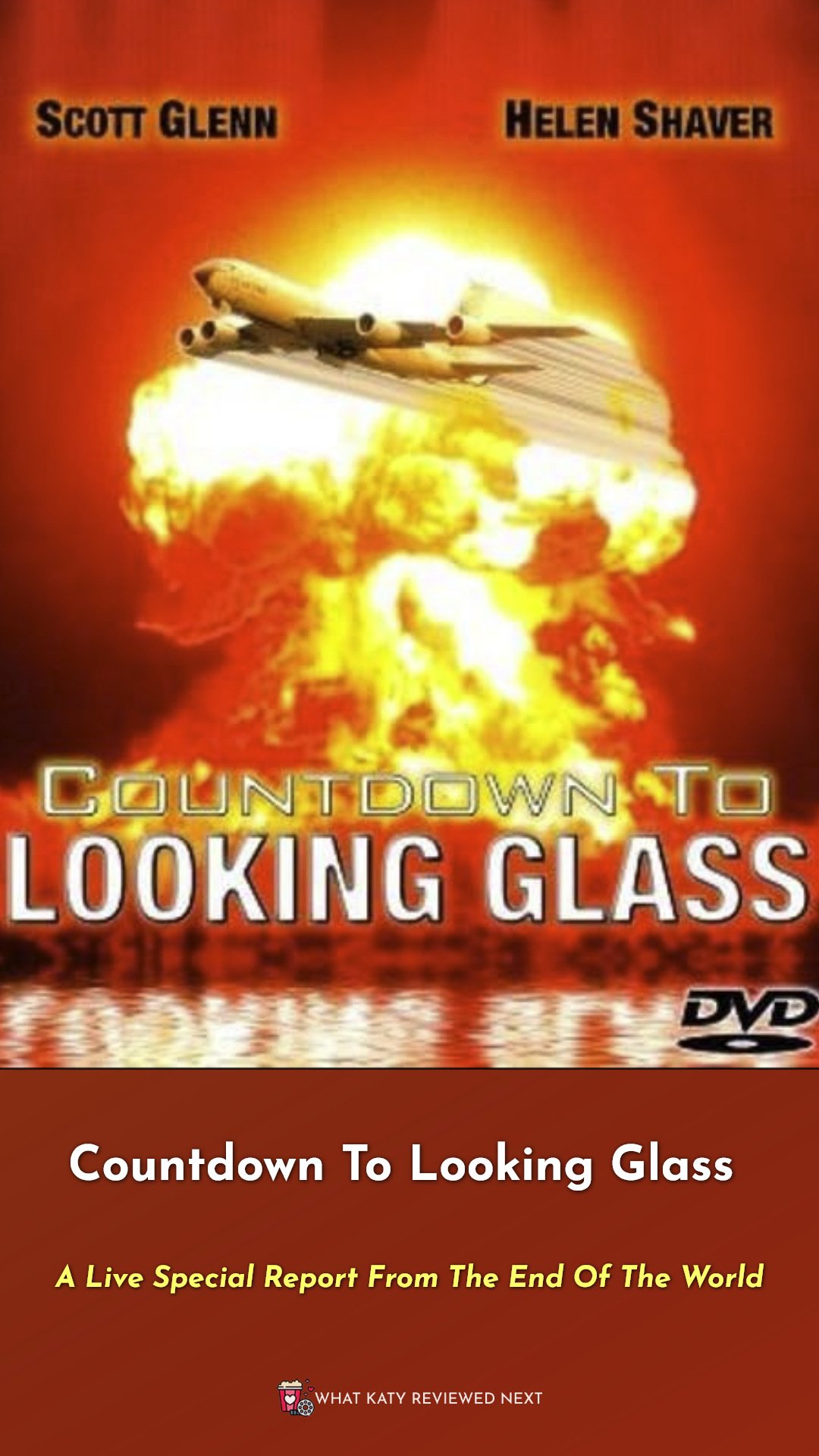
I wasn’t sure what I would be getting in to when I popped on Countdown To Looking Glass. It has been on my “to watch” list for a while as I added load of nuclear themed films to my watch list after the British film Threads (Directed by Mick Jackson, 1984) started to become more well known.
Threads was set in the United Kingdom in the industrial city of Sheffield and it portrayed what would happen to the UK if a nuclear attack was to hit major cities (I’ll have to add it review to my list). It was a stark and harrowing tale of normal people thrust into an abnormal situation they had no control over.
The storytelling method was standard: introduction to characters, scene setting via characters talking about events, and then the inciting event happening.
So when Countdown To Looking Glass came up as recommended as it was the American equivalent of Threads I thought I had an idea of what I would be watching.
That idea was completely incorrect.
What’s Countdown To Looking Glass About?
The film was made in 1984 (the same year as Threads) but the year that is portrayed in the film isn’t technically specified. We get some context clues such as mentions of the Cuban missile crisis, Jimmy Carter’s presidency, the 1983 US invasion of Grenada and the 1983 Beirut barracks bombings so we can infer that the film is supposed to take place in its broadcast year of 1984. This is further confirmed by the fact that the film features then sitting Representative Newt Gingrich (Republican) as a talking head to add some believability and gravitas to the story which doesn’t quite work — but we’ll get in to that later.
Several days prior to the events in the film starting, Argentina, Chile and Brazil have formed a “debtors cartel” and have refused to pay back loans made by US banks. This has lead to 3 American banks collapsing and a run on several others.
How much money was at play here?
$3 million.
HAHAHAHAHAHA!
That’s only like $9.5 million today — Lehman Brothers alone reported a single QUARTER loss of $2.8 BILLION in March of 2008 which lead to the global market crash so hearing $3 million tanks 3 banks is rather ludicrous by today’s standards but the 1980s was a capitalists dream so I suppose in that light it would have been frightening and plausible.
So with the run on the banks continuing the US Government steps in, not with a 2008-style bail out but instead they close the banks, locking people out of being able to withdraw money. This causes widespread protests as people are (rightly) worried they might lose their money and as the buoyancy of the US dollar slows due to the reduced circulation, this has knock-on effects across the globe.
Because oil is so intertwined with the US Dollar (it’s the default currency for trading oil and is called the petrodollar), the lack of US currency availability has an impact on the Middle East oil producing countries.
Oman loses $700 million that was tied up in a now collapsed US bank. That’s the equivalent of $2 billion today but Oman is worth an estimated $147 billion so I really don’t think that $700 million would cause them to break a sweat. Even so, the $700 million loss causes civil unrest and the government is toppled by Soviet-backed guerrillas.
Unrest in the region spreads with the bombing of the US Embassy in Saudi Arabia which kills the US Ambassador and several embassy staff. It’s thought that Omani forces are responsible but Iraq and Kuwait are also suspects trying to capitalise on the instability. Then the Emir of Kuwait is assassinated and the entire region goes to red alert.
Saudi Arabia asks the US for helps in securing their borders, stopping civil unrest and protecting their oil interests and in response the Americans send the largest contingent of troops since the Vietnam war. They also send a fleet of ships and submarines headed by the US aircraft carrier Nimitz.
In retaliation for the Saudi’s requesting the American’s help, Oman blockades the Strait of Hormuz and will only allow tankers through if they pay a $10,000 “toll” (around $38,000 in today’s money – far less than the $2 million toll Iran is currently charging for safe passage).
Tensions begin to increase as the USSR sends their own fleet towards the region, along with several nuclear powered (and armed) submarines which will reach the region before the US forces will. A Dutch tanker tries to run the toll blockade and is destroyed which furthers tensions.
The question is, with everyone’s fingers on the nuclear trigger who will be the first to act?
The Good
I quite liked the setup of the film’s story. We’re drawn into it through a series of news segments presented by CVN News anchor Don Tobin (Patrick Watson, Witness To Yesterday – 1998) which explains the debtors cartel, bank run and the unrest that follows.
There are also “live” segments from various other reporters that cover the White House press conferences, military deployments and events in the region.
The news anchors are all very believable and the set-up is like something you would get on a news programme. I think it was trying to be a “modern” War Of The Worlds where people tuning in part-way through the broadcast thought it was a real news programme however they didn’t fully embrace the news format which leads to some issues which I’ll discuss later.
The story is split into “Days” and it’s a bit confusing as we start at “Day One” even though the “debtors cartel” and bank run was around 3-to-4 days before the broadcasts started so the timeline is a little skewed.
The characters are all likeable as well, we get a sense of who they are through how they handle the circumstances: Don is worried about his family, Dorian Waldorf (Helen Shaver, Poltergeist: The Legacy – 1996-99) is trying to make a name for herself in a male-dominated industry but soon realises the story is more important than her career (or love life), and Michael Boyle (Scott Glenn, Apocalypse Now – 1979, The Hunt For Red October – 1990) is the roving “danger man” reporter who fears nothing and has been in many war-torn countries and situations before.
It could have been formulaic but the changing of news items, cuts between anchors/reporters and a genuine feel of a “live” newsroom keep the pace popping along that keeps the story engaging and holds your attention.
The Bad
While the news studio aspect is interesting, the story is interspersed with “real world” stories from the reporters.
We see Don with his wife and Dorian with her White House aide boyfriend and this takes us out of the “news” aspect of the story completely.
This is especially noticeable when you have Don chatting to his wife, or a random scene in the production booth to then cut to a “news item” featuring Michael Boyle who has no behind-the-scenes story at all.
Perhaps if we’d have had some “found footage” style vignettes of Boyle and his crew talking about shot setups and how worried they were about the escalations in tensions it would have fit in with the personal studio segments a bit more, but without that it just seemed jarring and a way to shoe-horn in information that could have been done within the context of the initial “live broadcast” scenario initially presented.
The Ugly
I wouldn’t say “ugly” as such but the timeline in this movie is all over the place.
The film is presented as showing 9 days of action from just past the initial bank failure to the conclusion of events in the Strait of Hormuz but it sometimes doesn’t make it clear what event happened when, mixing timelines so current events might have occurred previously as well as occurring now.
I also found the lack of concrete information about when all of this was supposed to happen slightly off-putting as they used a then-sitting real life Representative (Newt Gingrich) which anchors the film in a particular real point in time.
They also mention real world events such as the invasion of Grenada and bombings in Libya as happening “last year” which ties the film to being set in 1984, while then seemingly going out of their way to not mention the year at all!
This becomes more problematic when you have an address by the President (who was Ronald Regan in 1984) but they don’t show any footage of the President and his voice isn’t even a rough approximation of Regan.
It would have been far better to have dropped the real-world ties (like Gingrich) and had surrogate characters, that way we could have had a Reganesque President appear on screen more than once, and Senators and Representatives being bolder in their messaging and it being more fluid in terms of when the film was set.
Final Thoughts
Overall the film was quite good. The pacing was a little slow in places and, as I mentioned, the “real world” interactions took me out of the news broadcast scenario quite a but but it was enjoyable.
What surprised me was how prescient the film is.
How many people before 2026 would have even heard of the Strait of Hormuz or realised how key it was to the world’s oil supplies? People who watched Countdown To Looking Glass in 1984, that’s who!
I do think the film stretches the premise of how quickly we would be willing to launch nuclear weapons at each other but this was at the height of the Cold War so tensions were high and any American film had to propagandise and make the USSR out to be the bad guys but with what is happening now with Iran, the Strait of Hormuz and Russian attitudes towards the west this film strangely forecasts current events in a way.
The film does a good job of showing how quickly things can escalate under the “fog of war” if we don’t listen to each other and let money be the primary driver for actions — both personally and militarily.
Whilst the film hasn’t stood the test of time in terms of the finances (banks going bust for $700 million and not being bailed out because that’s a very cheap and easy solution given what we now know post 2008), the main message about conflict escalation and how easy it is for things to run away from your when you’re merely a “peace keeping force” is still very relevant today.
Watch this film if you want to escape from real life while being reminded how much worse real life could actually be.
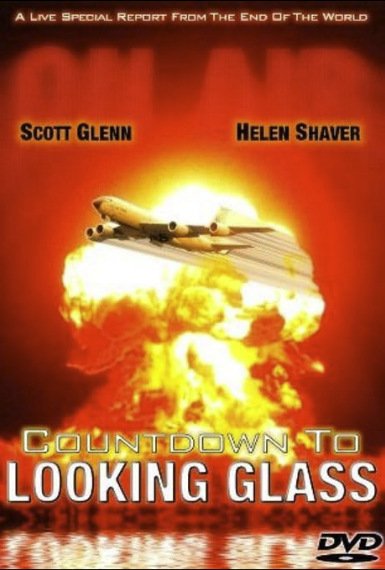
(Oh! An if you’re wondering about the title, Looking Glass was the US Presidential Strategic Air Command plane that could oversee and command operations.)