
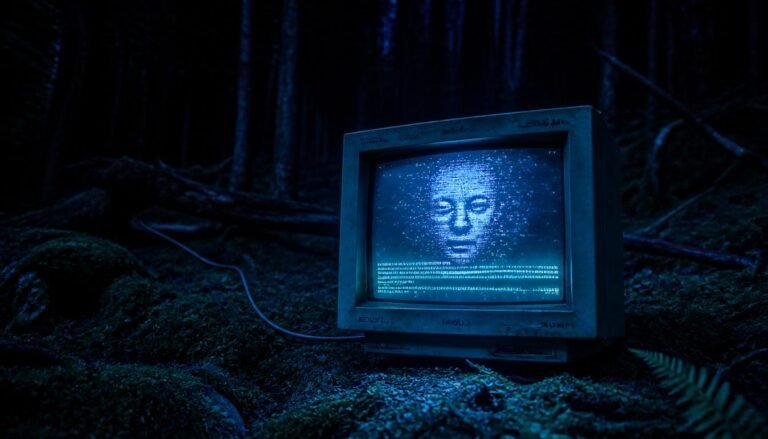
Millenia ago, our ancestors would sit around campfires and speak of scary things. These could be things that they had seen themselves, or it could be lore that has passed down verbally through the generations.
These stories were often used as warnings for the young members of the tribe — a reason not to enter a certain part of the woods, or an old man’s house, or that cave with a monster at the back of it.
Then with the invention of the printing press, the stories moved from verbal form to written form.
They were now able to escape being a localised tale and spread across the country (or even further if people took the printed word with them).
So while these scary tales told in the dark moved from hyper-local to national, they still required people to seek them out, or to be around people who had knowledge of them.
Some of these tales were based on true stories, some were true stories that had become twisted over countless retellings, with each orator or writer adding their own twists and turns, and some were outright fabrications.
And while the obvious fabrications fell by the wayside over time, some still stick with us today like Anastasia Romanov’s survival, teenagers fleeing lovers lane after hearing a murder escaped a local mental institution only to find a hook attached to the handle of their car, Bloody Mary, Sewer Alligators, Razor blades in candy — I’m sure you get the picture.
These Urban Legends were often picked up by popular media at the time: films and comics were the main spreaders which kept them alive in the public consciousness.
Then, when the internet came to wide adoption in the early 2000s, these tales jumped media again and began to carve out a place on the world wide web.

Now anyone with access to a computer could access these tall and scary tales, from almost anywhere in the world.
Making the leap to the modern media of the internet allowed anyone to create their own Urban Legends, and the term “Creepypasta” was used as a collective term for these horror-themed tales.
Why Creepypasta Though?
During the early days of the internet (Web 1.0), before we had social media (Web 2.0), most communication was done through Usenet, bulletin boards and forums.
It was quite common to see the same content being posted in multiple places by different authors and this became known as Copypasta due to the copy-and-paste nature of the content.
Pasta though? Well, it’s obviously taken from the term “paste” but it morphed into “pasta” because (some sources claim) of the short amount of time that pasta takes to cook – highlighting the short amount of time it took to create and share this type of content.
As scary tales began to gain popularity, the term “creepypasta” was coined to differentiate it from spam-like copypasta.
While creepypasta often spread as widely and as quickly as copypasta, it wasn’t considered as “low value” as its predecessor.
What Defines A Creepypasta
There’s not one true definition of creepypasta: There’s no set length or format, no specific place it gets posted and no particular style.
The one attribute that creepypastas share are that they unnerve the reader or viewer, instilling a sense of unease and dread.
Photos evoke the feeling of the uncanny valley, written tales seem normal until they take an unsettling twist.
And they’re all presented as real events — the producer of the creepypasta knows someone’s sister who had this event happen to them, it was a cousin, a distant relative, most definitely printed in a long-lost newspaper column.
As with tales told around camp fires millennia ago, creepypasta tales are meant to be shared and spread. In order to do this they evoke a sense of urgency (a killer is in your local area now, the authorities are trying to hide this and we need to warn everyone now).
The difference between our camp fire tales and creepypasta though is that digital medium allows the producer to extend the legend giving it new weight.
Creepypasta about a serial killer? Why not create some police radio calls, a newspaper front page or a TV news report?
Creepypasta about poison in food? Create a fake recall notice.
With creepypasta, it’s not just about the words but the media that goes along with it.
You’ve Seen Creepypasta Even If You Don’t Know It
If you’ve ever been on the internet, you’re bound to have seen some form of creepypasta. While they used to be contained to forums and sites like Tumblr that weren’t exactly mainstream when Facebook came along they were able to break containment and reach the wider internet.
All those weird posts about kids going missing in the next town over that your drunk Aunt shares? Creepypasta.
Someone mentioning that something sinister happened to their cousins roommates brothers best friend’s hairdresser (but don’t offer proof)? Creepypasta.
And then of course we have the creepypasta that completely breaks containment.
Like Slender man and the Backrooms.
Case Study 1: Slender Man (The Blueprint)
Slender Man was originally a PhotoShop contest entry on the website “Something Awful”.
The PhotoShopped photos were posted on the 10th of June 2009:
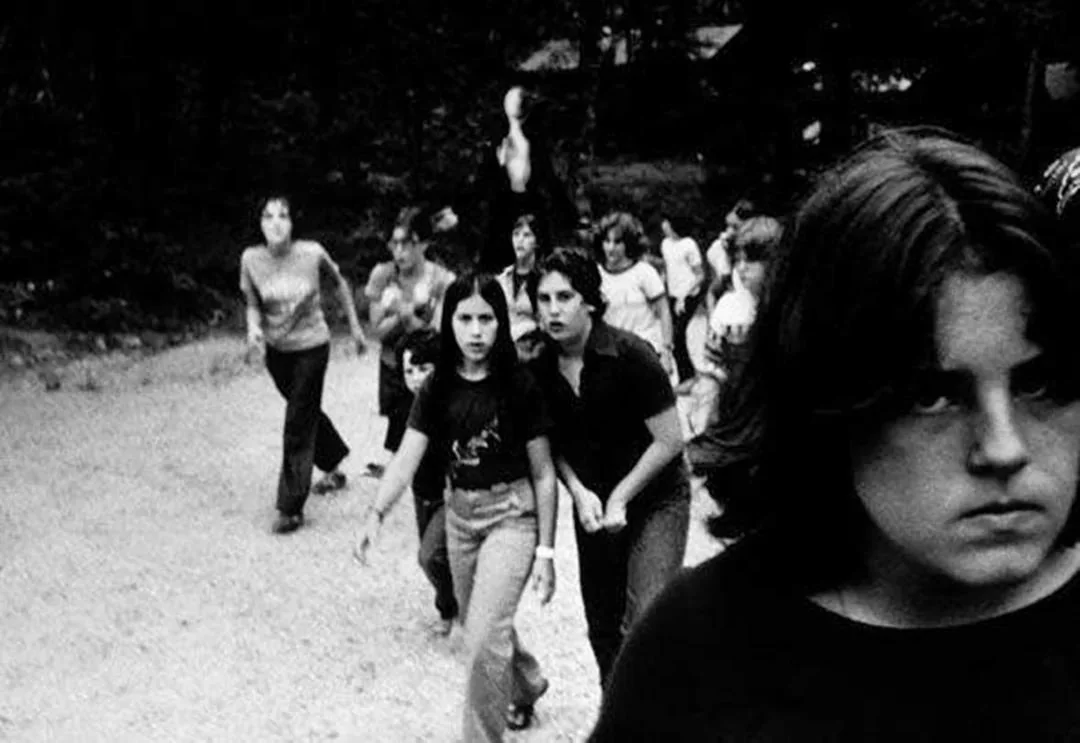
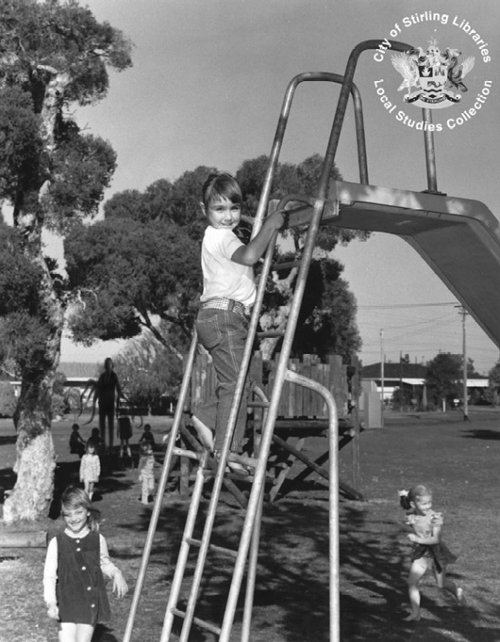
Source: Victor Surge on Something Awful
And were accompanied with a few short lines of text. Under the first;
“we didn’t want to go, we didn’t want to kill them, but its persistent silence and outstretched arms horrified and comforted us at the same time…”
1983, photographer unknown, presumed dead.
And as an explanation of where the photos came from:
One of two recovered photographs from the Stirling City Library blaze. Notable for being taken the day which fourteen children vanished and for what is referred to as “The Slender Man”. Deformities cited as film defects by officials. Fire at library occurred one week later. Actual photograph confiscated as evidence.
1986, photographer: Mary Thomas, missing since June 13th, 1986.
The forum post referred to “The Slender Man”, a tall gangly pale looking figure sinisterly hovering in the background of the two black and white photos.
The idea of Slender Man popped off, with people supplying more images, newspaper articles about missing children and a weirdly tall creature being seen in the area, and lore about his beginnings. Before long, Slender Man reached mainstream media, spawning a wave of indie features and culminating in a major studio release by Sony Pictures in 2018,
Slender Man was also said to be behind the stabbing of a teenager by her two friends* who though that by sacrificing someone they loved to The Slender Man they would please him and be able to enter his house. Their victim fortunately survived despite being stabbed 19 times, and the perpetrators were committed to secure psychiatric facilities in 2017. Both have since been released however one absconded from their supervised home and is now awaiting a hearing to see if they will be returned to the facility.
*I’m not using their names. They don’t deserve any more notoriety names are freely available through the above links if you’re desperate to find out
The stabbings caused a moral panic and launched a widespread discussion about creepypasta content on the internet and the effect it can have on people.
Case Study 2: The Backrooms (The New Era)
Unless you’ve been hiding in The Backrooms yourself, there’s no way you can’t have heard about the smash hit movie sensation of 2026 called… er… “Backrooms”. But where do they come from?
In 2002 some photos were taken of Rohner’s Home Decorating store in Oshkosh, Wisconsin and later uploaded to the Oshkosh Radio Control company’s website around September 2003.

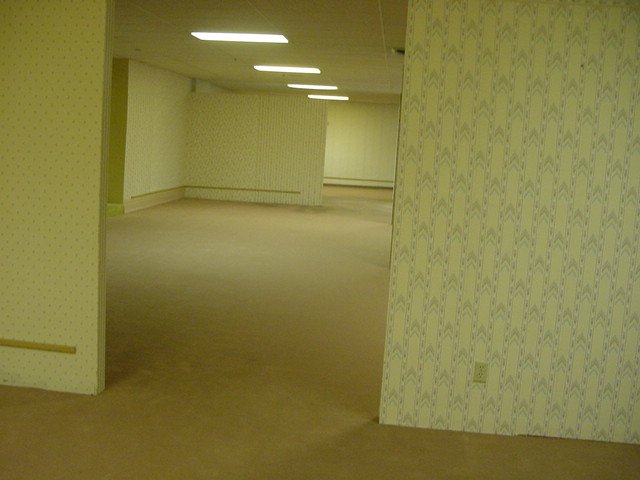
The originals were thought lost to time but thankfully the Way Back Machine captured the page.
The images show a disused furniture store with its strangely yellowed wallpaper, paintwork and carpet evoking that “uncanny valley” feel that we talked about earlier. It’s obviously a real space but the panels of fluorescent lighting, the weird placement of walls and the general blandness of the space just makes it feel “off”.
In 2018, the images made their way to 4chan and then they were reshared in 2019 when they took on a life of their own and a whole mythology sprung up around them.
The story goes that The Backrooms are part of liminal space — the space between that exists without existing. In order to enter The Backrooms, a person “noclips” out of reality.
“Noclip” is taken from gaming where a character has the ability to pass through walls and floors either due to a cheat or a bug in the game. These areas are not usually meant to be accessible to the player and may contain hidden game assets, shapes stored for quick rendering later and other strange visuals.
In “real” life, when you noclip out of this reality you pass through into The Backrooms, a seemingly never ending maze of interconnected spaces. The rooms started out just blandly yellow and lit by the muted yellow glow of fluorescent lights but as the lore expanded further room styles and levels were added.
The one constant was that things here were just “off”, an attempt to create what the world looks like without actually ever having seen it. Backwards signs, furniture clipping into walls, strange sounds always around the corner but never being identified and shapes that appear in your peripheral vision without being recognisable as human.
The Backrooms mythos expanded when YouTuber Kane Parsons uploaded a series of “found footage” style videos to the platform which he then expanded further in to his 2026 hit film.
These are just two examples of rich stories that make up the creepypasta genre and we don’t have time to cover them all here so please check out the Creepypasta website which collates a lot of stories and media.
The Future Of Creepypasta
As technology changes and evolves so does the methods and means to tell stories.
Various creepypasta games are available, immersing the player in the mythos and worlds of Slender Man and The Backrooms and the game format lends itself well to a plethora of creeypasta style content.
AI Deep Fakes
With AI being able to create almost anything these days, it’s just a matter of time before its use widens to create content that backs up creepypasta tales – from newspaper clippings to news anchors reporting on a subject, there is no limit to the content that can be used to widen the creepypasta lore.
AR
While augmented reality (AR) hasn’t become as much of a thing as people thought it would, it does lend itself well to the creepypasta genre. Imagine walking down the street and holding up your phone to see Slender Man lurking behind a tree, or your smart glasses showing you furniture noclipping through the walls of houses.
Crowd Sourced Gamified Tales
While creepypasta is generally crowd sourced, there’s no real reward for contributing to the lore. Creepypasta specific sites could award points for contributing with voting on certain posts dictating the direction the story takes.
More Reality Bending – AI Psychosis
As the use of AI increases, expect more AI creepypasta to develop. The Backrooms are a liminal space between realities, but AI has the ability to bend the one we actually reside in.
More Mainstream Attention
With the massive success of Backrooms in theatres this year, Hollywood is officially paying attention. Expect a wave of cinematic universes stemming from pre-existing internet lore. We could see a prestige Hollywood revival of Slender Man, an anthology series tracking the exploits of the SCP Foundation (a massive collaborative wiki chronicling fictional supernatural containment procedures), or a psychological thriller adaptation of the Russian Sleep Experiment — a tale perfectly suited for the big screen.
A Digital (R)Evolution
In the primal past we used to sit and listen to people tell us stories around the camp fire, then we read other people’s words on paper.
While these storytelling methods had the ability to draw us in, to allow us to imagine the horrors being spun before us, these stories were controlled by others. While the tales could vary over time with additions from new story spinners, they were out of our hands and not our stories to tell.
Now with digital media — whether that be social media, YouTube, TikToks, AI, AR, game engines, blogs and more — we now have the ability to create, maintain and control our own narratives and add to a vibrant community of creepypasta producers.
Whatever direction creepypasta takes after the success of The Backrooms, it’s not a genre of internet content that can easily be killed off, and if they try I am sure there is a weird version of it somewhere in The Backrooms.